
How do you stay sharp into old age?
Some people reach 100 and remain perfectly sharp. What is their secret? With the CENTURY-BRAIN Initiative, Prof. Henne Holstege is investigating how their brains stay protected against dementia.

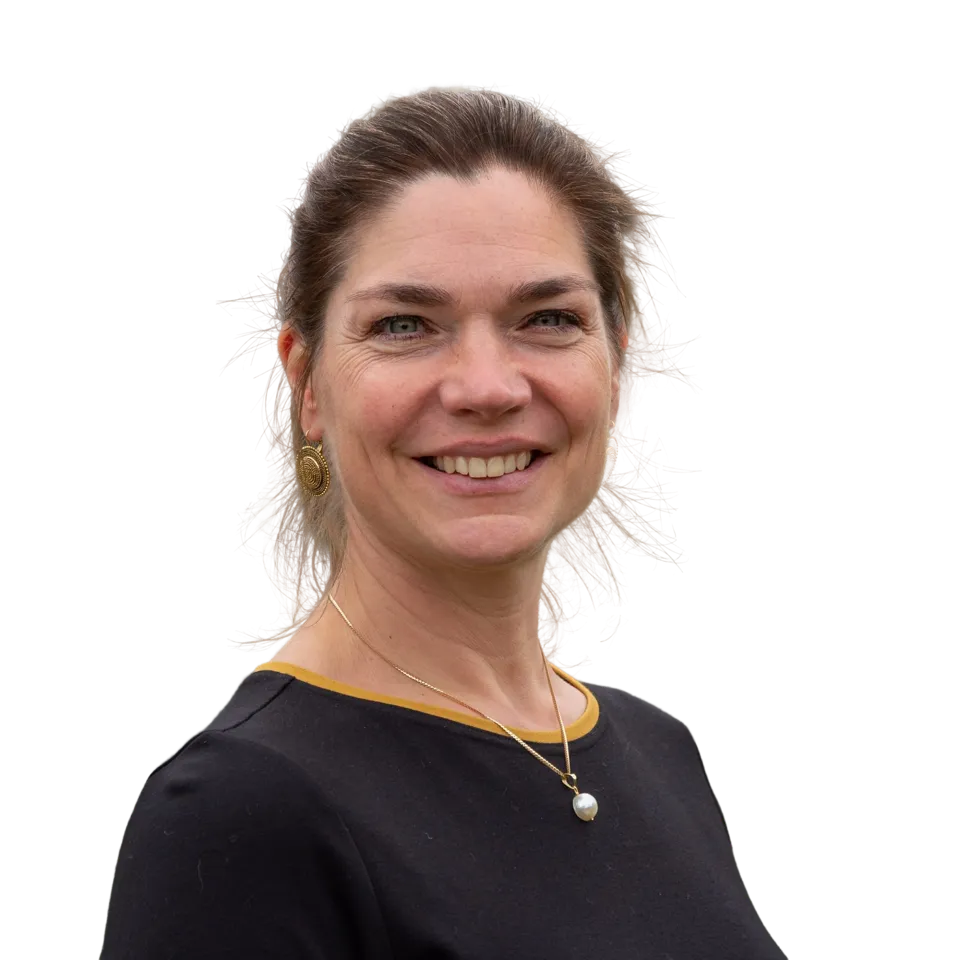
Prof. Henne Holstege
VIB-KU Leuven · Amsterdam UMC
A question that affects everyone
It is a question that affects everyone. As you grow older, the risk of dementia rises day by day. One in four people develops dementia after the age of 85, which is why so many people know someone who has or has had it. Today almost 320,000 people in the Netherlands live with the disease, and as the population ages that number could reach half a million by 2040. Yet some people pass 100 and remain perfectly sharp. What is their secret?
- 1 in 4
- people develop dementia after the age of 85
- 320,000
- people in the Netherlands live with dementia today
- 500,000
- people with dementia by 2040, as the population ages
- €14.3 bn
- in costs per year: the most expensive condition in Dutch healthcare (2023)
The beginning
Henne Holstege has been occupied by this question for more than ten years. But it began much earlier: in 2002, when 112-year-old Hendrikje van Andel-Schipper picked up the phone herself and called the neurology department of UMC Groningen, where Holstege’s father, Gert Holstege, was then professor of neuroanatomy.
At 82 she had donated her body to science, but wondered whether it would still be of use, as at 112 she had become somewhat frail. Gert Holstege went to visit her. She turned out to be a medical marvel: mentally she was perfectly lucid.
For Henne Holstege, this was the reason to change course. She stopped working as a cancer researcher and began investigating how some people stay so healthy for so long. How do they keep their brain cells healthy for so long?
When Hendrikje van Andel-Schipper died at 115, her brain proved comparable to that of a sixty-year-old.
An international authority
Henne Holstege is a professor at the VIB-KU Leuven Center for Brain & Disease Research and affiliated with Amsterdam UMC. Since 2013 she has been building the 100-plus Study there: the world’s largest study of cognitively healthy centenarians.
She speaks at conferences worldwide on cognitively healthy ageing and works with leading institutions such as Harvard, King’s College London and Imperial College London.
- 2013
- Start of the 100-plus Study
- 500+
- centenarian participants
- 150
- donated brains
Recognition
- 2020
- Alzheimer’s Research Award Hans und Ilse Breuer Foundation
- 2026
- Alzheimer’s Research UK (ARUK) prize Recognised as an international authority on cognitive resilience and dementia prevention
- Partners
- Harvard · King’s College London · Imperial College London Collaboration with leading institutions
What the study has already shown
The brains of sharp centenarians have already yielded insights that have drawn attention worldwide. They are full of protective factors that make them resilient to the damage that leads to dementia in most people. In some of them, Holstege even found substantial amounts of Alzheimer’s proteins, without them ever developing symptoms. Nature shows that protection against dementia is possible. Holstege is working to unravel exactly how that protection works.
From discovery to breakthrough
With the CENTURY-BRAIN Initiative, Holstege is taking the crucial next step. She is building a unique dataset that examines, down to the molecular level, exactly how that protection works. This is knowledge that could be the key to a treatment for dementia. Crucially, the dataset will be made available to researchers across Europe, so that the knowledge gained can spread and multiply rapidly, with the ultimate aim of finding a treatment for dementia. Until now, it has mainly been American institutions that have made datasets of this scale available to science, because the work is extensive and costly.
What we promise
 We do
Within five years the database will be in place: 1,043 brain tissue samples measured, a secure platform for researchers and the first leads for new medicines and blood tests.
 We don’t
A medicine in the short term. That takes years. But without this map, no one can begin.
Why Lenos supports this research
Dementia is the single most expensive condition in Dutch healthcare. According to the RIVM, its costs reach €14.3 billion a year (Cost of Illness). Yet fundamental research such as Holstege’s often receives insufficient room in the regular funding system, where she spends much of her time seeking funding from foundations with fierce competition.
In reviews, international experts have assessed the CENTURY-BRAIN Initiative as scientifically excellent. An investment supports a proven leading scientist and a study that can change the world.
Lenos Foundation has ANBI status: your gift may be tax-deductible in the Netherlands.
What leading scientists say
Before Lenos Foundation was established, the most prominent researchers in Holstege’s field reviewed the research and the research plan.

“Ik moet zeggen dat ik in mijn hele carrière niks heb gezien in het veld dat zo vernieuwend was. Ik denk dat het een fantastisch idee is om de zaak om te keren. En ik denk dat [Henne] daar mijlenver voor de rest staat.” “If I could make another change in my career, I would work exactly on what Henne is doing. I really think this is the most important project to work on.” “There is no other cohort that meets the molecular detail of what [Henne] has proposed. No one has done it. No one is close to being able to do it the way she will be able to do it. This is a rock solid project.” “I really like what she’s done, which is to really start something herself with almost no funding and create something really remarkable that everybody wants to know about. […] It’s a fantastic project. She’s a real star and her work is really exceptional.” “I think it’s absolutely elegant idea. I wrote a proposal to do exactly the same many years back in Germany and Luxembourg, which was not funded. I’m super happy that she succeeded to do that.” “Een derde van het cohort heeft het brein gedoneerd. Dat is uniek. Dat is echt ongelofelijk. En daar zit hem ook de kracht. Dit is een goudmijn.” “The scale, depth and scientific rigor of this cohort make it an important resource for understanding the factors that contribute to resilience and exceptional longevity. As one of the most unique datasets of its kind, it has the potential to generate important insights into healthy aging and resilience to neurodegenerative disease. We've already seen firsthand the value of this research in informing scientific discovery, and continued investment in this work could benefit the broader research community for years to come.” Selection process
The choice of Henne Holstege was no coincidence. We are glad to be open about how that choice was made.
- 01
Relationship to Lenos
Henne Holstege is the sister of co-founder Gert Jan Holstege; co-founder Gijs Nagel has known her since childhood. Both saw at close range how she built her research from nothing and with little money, and how she has had to fight for funding for more than 13 years. After a major health conference in the US, where Henne spoke as a prominent speaker, it emerged that her American colleagues had tens of millions of dollars in research funding. That is where the discussion began that led to this foundation.
- 02
Skin in the game
As entrepreneurs, Gijs Nagel and Gert Jan Holstege had long wanted to give something back. They do not only ask for attention and funding: the first major, unconditional donation comes from themselves. They invite others to join this philanthropic initiative.
- 03
Extensive due diligence
The possibility of bias was certainly recognised. That is why Lenos Foundation was only established after extensive due diligence. The most prominent researchers in Holstege’s field reviewed the research and the research plan. They were unanimously positive and called the dataset a necessity for science.
- 04
The next scientists
The Netherlands has too many leading scientists for us to claim that we support the very best. After Henne Holstege, the foundation will therefore establish a think tank of scientists and experts to select the next candidates. Each selection is followed by new due diligence in the field, so that the need for and value of each study are clear.
Support the CENTURY-BRAIN Initiative
Support a proven leading scientist and a study that can change the world. We would be pleased to tell you more in a personal conversation.


